
Reviewed · FUERTEVENTURA SURF LESSONS
Fuerteventura South: Learn to surf on stunning beaches!
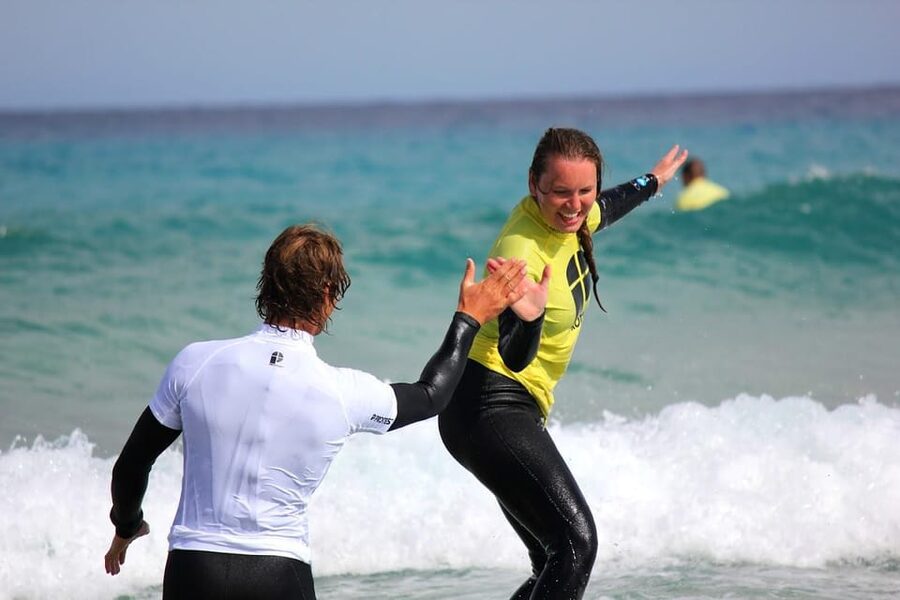
First time on a surfboard can feel wild. This lesson keeps it simple and safe on La Pared, with step-by-step coaching and equipment sorted for you. I especially liked the small groups (max 8), and the whole setup is built for getting real practice time, not just watching from shore. One thing to note: you may have to carry the boards for a short walk down to the beach, which can feel like effort after the lesson.
You’ll start with a proper surf briefing, get your wetsuit and board, then spend about 2 hours actually working on paddling, pop-ups, and basic ocean safety. The instructors are hands-on, with lots of attention per person, including beginners who just want a first clean ride. If conditions shift, the school also plans ahead to take you to another sandy spot with waves.
The lesson length you see at booking is for the activity block, but your full time on the day usually runs longer once pickup and drop-off are included. Plan on about 4 hours total, and if you’re tight on time, keep some buffer.
In This Review
- Key highlights worth caring about
- Why La Pared is such a good place to start
- The teaching style: what you’ll practice in those 2 hours
- Small group sizes: the difference between a course and a crowd
- Hotel pickup in South Fuerteventura: worth it on a surf day
- What happens before you hit the waves
- Equipment and comfort: wetsuit, board, and those shower rooms
- When La Pared isn’t working: Esquinzo and Jandía as backups
- Pricing and value: is $60 a fair deal?
- Who this surf lesson is best for
- The only possible hiccup: carrying boards to the water
- What to bring so your day stays easy
- Picking the right mindset: what success looks like
- Should you book this La Pared beginner surf lesson?
- FAQ
- Where do we surf during the lesson?
- How long is the surf lesson, and how long is the whole experience?
- What’s included in the price?
- Do you pick up and drop off from hotels?
- What group size should I expect?
- Is it suitable for complete beginners?
- What languages are offered?
- What should I bring with me?
- Are photos available?
- Can non-swimmers or young children join?
Key highlights worth caring about
- La Pared instruction made beginner-friendly with a clear step-by-step plan: safety, paddling, and pop-up basics
- Small groups of 8 so you get more direct coaching instead of waiting your turn
- Board + wetsuit included, plus the school has shower and changing rooms in the south
- Best spot of the day: if La Pared is off, you’ll shift to Esquinzo or Jandía
- Hotel pickup in the south covers many resorts, so you’re not figuring out transport
Why La Pared is such a good place to start
La Pared sits on Fuerteventura’s southwest coast, and it’s known for waves that can work well for surf learning. The big win here is that the lesson focuses on basics you can actually use: how to read the water a little, how to paddle efficiently, and how to pop up with control instead of just hoping.
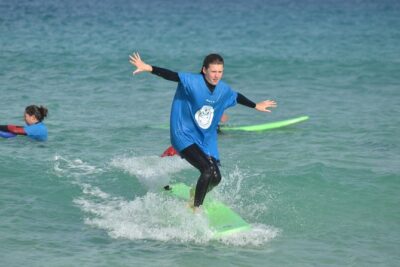
What I like about this setup is that it doesn’t treat you like a “spectator class.” After a short talk on the sand, you’re in the water with your coach so you can try, fail, adjust, and try again. That rhythm is where the confidence comes from.
Also, the day is planned around real ocean conditions. If La Pared isn’t suitable, the plan changes on the spot, and you’ll head to Esquinzo or Jandía instead of forcing a rough session. That flexibility matters more than people think.
More surf lessons on the island beaches
- Fuerteventura: Surfing Lesson in the south of Fuerteventura
★ 4.8 · 354 reviews - Lezioni di Surf per Beginner e Intermedi (6 persone a istruttore)
★ 5.0 · 350 reviews - Fuerteventura: Surf Lesson for All Levels and Ages
★ 4.8 · 205 reviews - Fuerteventura : Corralejo Surf Lesson
★ 4.7 · 186 reviews - Fuerteventura South: Learn to surf on stunning beaches!
★ 4.8 · 162 reviews
The teaching style: what you’ll practice in those 2 hours
The lesson follows a clear progression, and that helps when you’re new. You’ll cover the basics first, then move into the key physical skills: paddling out and popping up. There’s also time spent on ocean safety, which is crucial for first-timers who don’t yet know what to watch for.
In practice, this is the difference between random attempts and real skill building. A good first surf lesson should help you:
- get comfortable with the board and wetsuit
- learn how to position yourself before a wave
- understand what to do when you fall and when to try again
- build a pop-up motion that you can repeat under pressure
I’m also encouraged by how the school handles varying ability. On the same lesson day, I’d expect some people to stand immediately and others to need more tries, and the small-group format makes it easier for the instructor to adapt.
You’ll likely hear coaching in English, German, or Spanish depending on the instructor and your group.
Small group sizes: the difference between a course and a crowd
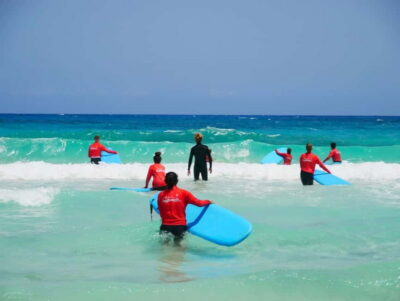
Max 8 participants changes everything. With that kind of ratio, your coach can notice what’s going wrong—your paddling angle, your timing, where your feet land—and correct it early.
That’s why it feels less like a group activity and more like a personalized lesson. It also helps if you’re traveling solo or with friends and family, because your session stays interactive without turning into chaos.
The vibe is also practical: you’re there to learn, and the instructors keep the energy moving so you can spend as much time as possible in the water. The goal is consistent tries, not long waits on the beach.
Hotel pickup in South Fuerteventura: worth it on a surf day
Surf days punish poor logistics. The nice part here is the pickup and drop-back is built into the experience for the southern region. You can typically get picked up in areas such as Las Playitas, Tarajalejo, La Lajita, Costa Calma, La Pared, Esquinzo, and Morro Jable.
You’ll find pickup timing by email from the booking system, and if needed the school may contact you through WhatsApp, email, or phone call with a specific time. The bus is marked with the school logo and will be black or white, which helps when you’re standing in a parking lot looking for your group.
Why I’d choose this even if you’re renting a car: once you’re in wetsuit mode, you don’t want to add driving, parking, and carrying beach gear to the day. This option keeps your energy for the water.
What happens before you hit the waves
Your day starts at the surf school. You’ll get your surfboard and wetsuit there, then head to the beach with your coach. Expect a short briefing on the sand before you go out.
That order matters. If you jump in without understanding even the basics—where to wait, what to watch, how to move on the board—you can waste your first attempts. The briefing helps you get your bearings fast and makes the water time more productive.
Once you’re on the beach, the instructor’s job is to keep you safe while also helping you improve. You’ll move through drills that build from fundamentals toward actually catching and riding waves.
More corners of the island worth a morning

Equipment and comfort: wetsuit, board, and those shower rooms
This lesson includes the surfboard and wetsuit, which is a big value add. You don’t have to hunt for rentals, pay extra, or bring a bulky wetsuit with you.
Another practical win: the school has showers and changing rooms in the south of Fuerteventura. After you’re done in cold-ish ocean water (even in the sun), you’ll want somewhere easy to change out of wet gear. It makes the whole day feel smoother.
You’ll also want your own towel and a change of clothes. Sunscreen and water are on your list too—because you’re in the sun even while you’re working.
When La Pared isn’t working: Esquinzo and Jandía as backups
The sea doesn’t always cooperate, and this is where the “best spot of the day” approach is smart. If La Pared conditions don’t line up with the lesson plan, the school will shift to Esquinzo or Jandía—both sandy beaches in the south with consistent waves.
This matters because beginners are more sensitive to rough conditions. A lesson should feel teachable, not survival-based. By changing locations when needed, the school keeps the session focused on learning rather than getting knocked around.
So the key idea is simple: you’re not locked to one beach no matter what the ocean does. Your day adapts.
Pricing and value: is $60 a fair deal?
At about $60 per person for a beginner surf lesson, you’re paying for more than instruction. You’re paying for equipment (board + wetsuit) plus the transfer, and the structure that turns ocean time into skill progress.
If you were to piece it together yourself, you’d likely pay for surf gear rentals and local transport, plus you’d still need an instructor to teach safety and technique. Here, you get all of it wrapped into one price, with small-group attention and around 2 hours of coaching on the sand and in the water.
One small note: your full day is longer than the headline duration. Total experience is around 4 hours with transfer time included. If you compare price, compare total time and water time, not just the booking duration.
Photos are optional and sold on site. If you’re hoping for action shots, I’d treat them as a “nice-to-have,” because you’ll have wet hair and a wetsuit tan, and those photos can look great. There’s also a photographer (Carlos is mentioned in the provided details), but you’ll pay for the images separately.
Who this surf lesson is best for
This is clearly aimed at beginners and first-timers. It’s also good for anyone who wants to improve technique without getting overwhelmed. The small group size helps if you’re shy, and the coaching structure helps if you’re excited but unsure what to do.
It’s not suitable for children under 8, and it’s not suitable for non-swimmers. If you’re not a confident swimmer, you’ll want to look for a different activity that’s specifically designed for your comfort level.
It can also suit families and friends because the group is small and the instructor can tailor attention across different learning speeds.
The only possible hiccup: carrying boards to the water
One practical consideration that can catch you off guard: you might need to carry the surfboards to the beach. In one account, it was described as roughly a 15-minute walk with some uphill and downhills.
That’s not a deal-breaker for everyone, but if you have limited mobility, don’t like carrying gear, or you’re traveling with kids who may struggle, factor it in. You can ease the situation by wearing grippy footwear, keeping water and towel handy, and planning for tired legs after the lesson.
The good news is the rest of the day is set up to feel organized—equipment and changing rooms are handled, and the coaching keeps you moving.
What to bring so your day stays easy
Don’t show up empty-handed. Bring:
- a change of clothes
- a towel
- sunscreen
- water
If you can, also bring something small for after the lesson, like a plastic bag for your wet stuff. You’ll be grateful once you’re back in the car or bus.
And if you’re sensitive to sun, consider extra SPF for your face and neck. Surfing is an all-day sun exposure problem, even when you’re busy learning.
Picking the right mindset: what success looks like
On your first surf lesson, success rarely means standing every time. It usually means:
- you understand where to position yourself
- you can paddle out more confidently
- your pop-up improves as the session goes on
- you catch a wave and feel the timing click
Many instructors are patient and adjust on the fly, which is exactly what you want. Names like Amy, Annie, George, and Rolf show up in the provided details, and they’re associated with patient, hands-on coaching and a friendly, supportive approach.
If you’re worried you’ll be too slow, know that the course is structured for your pace. The goal is progress you can feel in one session, not perfection.
Should you book this La Pared beginner surf lesson?
If you want a beginner-friendly surf session in South Fuerteventura with real coaching time, this is an easy yes. The small group size, included wetsuit and board, and hotel pickup make it a practical way to try surfing without turning your day into a logistics project.
Book it especially if:
- you’re a true first-timer or getting back into surfing
- you’d rather be coached closely than bounce around in a big group
- you want a lesson that adapts if La Pared isn’t ideal that day
Skip it if:
- you don’t swim confidently
- you’re uncomfortable with carrying boards to the beach (there can be a walk involved)
Overall, this is good value for your first surf lesson because you pay once and get instruction + gear + transfers in one package. Then you leave with the real thing: the feel of catching a wave, plus a foundation you can build on next time.
FAQ
Where do we surf during the lesson?
The lesson is planned for La Pared. If conditions there are not suitable, the school will take you to another sandy beach in the south, such as Esquinzo or Jandía.
How long is the surf lesson, and how long is the whole experience?
The lesson at the beach is about 2 hours. Total experience time is around 4 hours when you include transfer time.
What’s included in the price?
Your experience includes a surfboard, a wetsuit, and transfer from and to your hotel in the southern region.
Do you pick up and drop off from hotels?
Yes. Hotel pick-up and drop-back are included for hotels in the south, including Las Playitas, Tarajalejo, La Lajita, Costa Calma, La Pared, Esquinzo, and Morro Jable.
What group size should I expect?
It’s a small group with a maximum of 8 participants.
Is it suitable for complete beginners?
Yes. It’s designed for first timers and beginners, with step-by-step coaching that covers basics, ocean safety, paddling, and pop-up skills.
What languages are offered?
Instruction is available in English, German, and Spanish.
What should I bring with me?
Bring a change of clothes, a towel, sunscreen, and water.
Are photos available?
A photographer is available on site, and you can book photos. Photos are not included in the base price.
Can non-swimmers or young children join?
No. It’s not suitable for children under 8, and it’s not suitable for non-swimmers.
More Tour Reviews in Fuerteventura
- From Morro Jable: Dolphin and Whale Watching and Snorkelling
★ 4.6 · 3,111 reviews - Corralejo: Return Ferry Ticket to Lobos Island Fuerteventura
★ 4.7 · 3,098 reviews - Fuerteventura: Cofete Beach Jeep Safari
★ 4.5 · 1,644 reviews - Fuerteventura: Magic Catamaran Trip with Food and Drinks
★ 4.5 · 1,504 reviews
More Surf Days on the Beaches
- Fuerteventura: Surfing Lesson in the south of Fuerteventura
★ 4.8 · 354 reviews - Lezioni di Surf per Beginner e Intermedi (6 persone a istruttore)
★ 5.0 · 350 reviews - Fuerteventura: Surf Lesson for All Levels and Ages
★ 4.8 · 205 reviews - Fuerteventura : Corralejo Surf Lesson
★ 4.7 · 186 reviews
Still deciding? More Fuerteventura tours and crossings we have been out on ourselves


More Fuerteventura Surf Lessons, head to head.
 ★ 4.8Surfing Lesson in the south of FuerteventuraFrom $60354 reviews
 ★ 5.0Lezioni di Surf per Beginner e Intermedi (6 persone a istruttore)From $60350 reviews
 ★ 4.8Surf Lesson for All Levels and AgesFrom $59205 reviews
 ★ 4.7Corralejo Surf LessonFrom $59186 reviews
 ★ 4.5Surf Class at CorralejoFrom $78122 reviews
 ★ 4.51 Day Surf Lesson BeginnerFrom $6387 reviews
 ★ 4.9Learn to Surf LessonFrom $5965 reviews
 ★ 4.8Learn to Surf in the north of Fuerteventura!From $5953 reviews
Browse the lists this tour appears in