
Reviewed · COSTA CALMA KITESURF & WINDSURF
Fuerteventura: Kitesurfing beginner course
Kitesurfing starts with the right conditions. This beginner course in Fuerteventura turns a scary idea into a step-by-step skill plan, with small groups and on-water support. I love that you don’t just get theory; you build control with real drills, first on sand and then in the water, guided by Edu, Edo, and Andy. One consideration: this is an active course, and it’s not suitable for everyone (for example, pregnant women).
What I really liked is the mix of safety-first coaching and the fun factor that arrives as soon as you can manage the kite reliably. You start with wind and kite basics on the beach, then progress into water work like body dragging and early waterstarts with the kite flying over the correct wind window. A possible drawback is that you’ll need to follow simple rules closely on the beach and on the water, including no alcohol or drugs.
In This Review
- Key points to know before you go
- Why Fuerteventura is a smart place to start kitesurfing
- Course setup: small groups, 2-student coaching, and radio control
- The real learning arc: beach theory to waterstarts
- Day-by-day: what you practice and why it matters
- Day 1 and Day 2: Kite control basics (the foundation days)
- Day 3: Water skills, body drag directions, and early waterstarts
- What the instructor system gets right (and how it helps you learn faster)
- Gear, support, and what you must bring (plus the rules)
- Price and value: is $452 worth it?
- Language and fit: who this course suits best
- Practical expectations: what to do before your first lesson
- Should you book this beginner kitesurfing course in Fuerteventura?
- FAQ
- What language is the course taught in?
- How long is the beginner kitesurfing course?
- Where do we meet for the lessons?
- Is gear provided?
- Do I get coaching support while I’m in the water?
- How big are the groups?
- What should I bring with me?
- Is the course suitable for everyone?
Key points to know before you go
- Max 5 participants keeps the pace calm and the attention high.
- Up to 2 people per instructor helps you get corrections fast.
- Radio system coaching lets your instructor guide you while you’re in the water.
- Two-phase learning: kite control on land first, then body drag and waterstarts.
- Boat-supported lessons add structure and safety when you move off the beach.
Why Fuerteventura is a smart place to start kitesurfing
Fuerteventura has that “learning-friendly” vibe for kitesurfing: open space, plenty of wind, and long stretches where you can practice without constant crowd pressure. That matters on day one, when your brain is busy learning safety rules and wind basics and your arms are busy trying to figure out how the kite responds.
The course is designed around that idea. You’re taught to read wind and control the kite step-by-step, and the training moves from beach fundamentals to water practice once you’re controlling the kite consistently. That’s the key. Beginners don’t fail because they lack courage; they fail when the learning jumps too fast. Here, it’s paced so you build confidence and control before you ask your feet to do anything.
Another reason this location works well is the progression itself. You get the chance to learn on sand first, then transition to open water support. You’re not stuck doing one endless drill loop. The goal is to reach the point where you can body drag left, right, downwind, and upwind, and then try early waterstarts. That’s where the sport clicks.
More kite and windsurf days at Costa Calma
- Fuerteventura: Windsurfing Taster in Costa Calma Bay!
★ 4.7 · 37 reviews - Kitesurf School in Corralejo Book Your Classes
★ 5.0 · 37 reviews - From Corralejo: Small Group Windsurfing Class in El Cotillo
★ 4.9 · 20 reviews
Course setup: small groups, 2-student coaching, and radio control
This is a small-group course run by Siel, and the format is built for beginners. You’re capped at 5 participants, and instructors work with a tight ratio (max 2 people per instructor). For first-timers, that ratio is huge. When you’re learning kite safety and wind window concepts, you don’t want to wait for your turn.
Then there’s the radio system. When you’re in the water, you can stay connected with your instructor instead of guessing. It reduces the “hope I did it right” feeling and replaces it with coaching you can actually use while you’re still in the learning moment. In kitesurfing, small corrections matter, and radio coaching helps you get them.
You’ll also notice the instructors are international in practice. The course is taught in English, Italian, and Spanish. In the real world, that helps you understand safety instructions instantly, which is non-negotiable. Clear communication is how you learn the right habits early.
The real learning arc: beach theory to waterstarts
This course is 3 days long, and it follows a clear path. You start from zero. First you build the mental model: wind, kite behavior, safety, and how the wind window works. Then you translate the theory into movement on land by learning how to fly the kite. After you show solid control on the beach, you move into the water and start working on body drag, then waterstarts.
In practice, the training tends to split into two phases: the first part focuses on fundamentals on a beautiful beach, then the final day moves you toward open water, where you practice with more freedom and more real riding mechanics. That pacing makes sense. It prevents the common beginner trap: rushing into water too early and building frustration instead of skill.
Here’s what that progression feels like as you learn:
- You start learning to understand wind and safety without rushing.
- You train kite control so the kite responds predictably to your hands and body.
- You transition to water with confidence that you can manage the kite while you’re strapped into the learning process.
- You practice the motions that teach control and direction before you aim for full rides.
If you’re coming in unsure whether you can do it, this course design directly addresses that problem. You don’t need to be a great athlete; you need a good path.
Day-by-day: what you practice and why it matters
Day 1 and Day 2: Kite control basics (the foundation days)
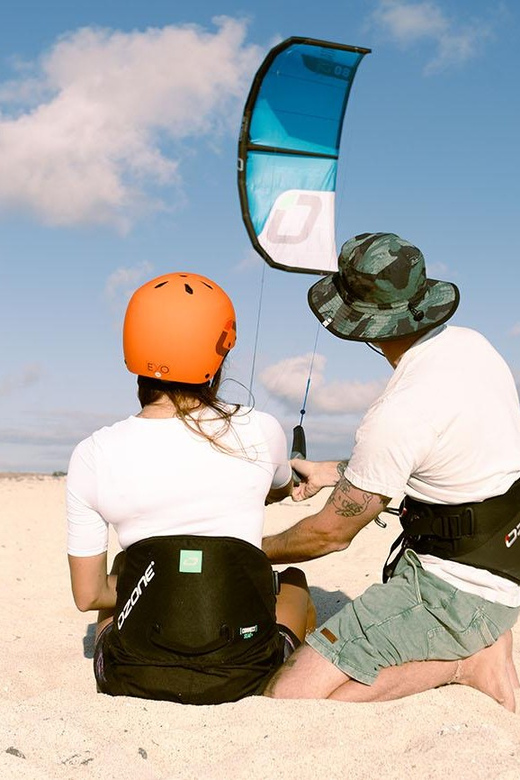
You begin with theory on the beach. The topics are practical and focused: wind basics, safety rules, how the wind window works, and how the kite flies in relation to your position. This isn’t just book learning. The point is to help you predict what the kite will do next, which reduces panic later.
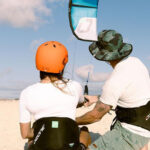
After that, you learn to fly the kite on land. You’re training coordination and timing before you add water movement and board handling. The goal is simple: get to a point where kite control is stable enough that you can bring that control into the water.
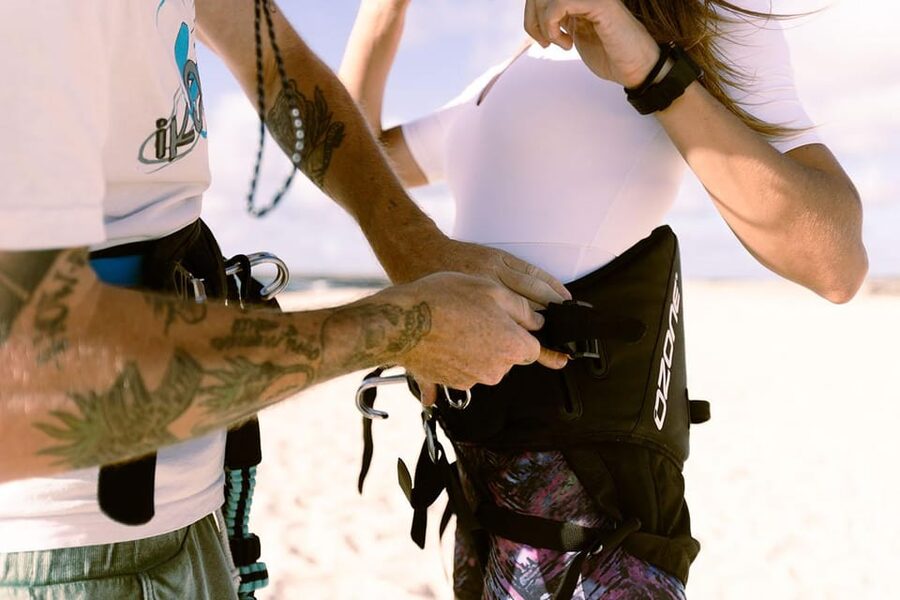
Two things make these days especially valuable. First, you’re working on a safe, guided learning setup rather than improvising. Second, instructors can correct you quickly because the groups are small and the instructor ratio is tight. That turns “I think I’m doing it right” into actual progress.
More corners of the island worth a morning
Day 3: Water skills, body drag directions, and early waterstarts
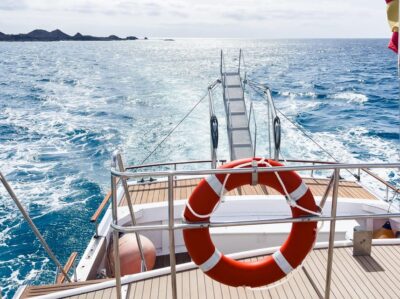
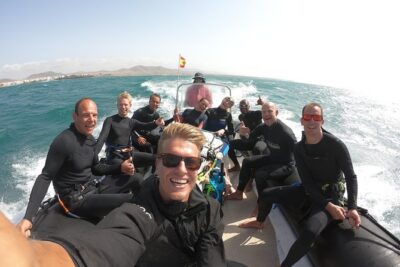
Once you’re controlling the kite reliably on the beach, you move into water with boat support. That boat component matters for beginners because it adds structure, reduces uncertainty, and supports safety when conditions change.
You start with body drag work in multiple directions:
- left and right
- downwind
- upwind
Why this sequence matters: your body drag skills teach how to use power and direction without needing complicated board control. You learn how to keep yourself moving, how the kite’s pull affects your body position, and how direction changes with wind and kite angle. It’s not glamorous, but it’s the stuff that turns later sessions into smoother riding.
Once you have solid control during body dragging, you progress to putting the board on your feet and trying the first waterstarts. At that point, you’re taking everything you learned about kite control and applying it to a moment that feels like real kitesurfing. Even if it’s challenging, the value is clear: you end the course knowing how the sport’s core mechanics connect.
What the instructor system gets right (and how it helps you learn faster)
This course emphasizes quality, safety, and fun, but it backs those words up with specific teaching mechanics. The max 2 students per instructor format means you’re not stuck watching from the sidelines while someone else gets help. You can get quick corrections while the memory of your last attempt is still fresh.
The radio system is another part that helps your brain. In water, you can’t always process visual cues the same way you do on land. With radio coaching, your instructor can guide your kite control decisions right when you need them, which speeds up the learning curve.
And the instructor approach itself comes through in the way students describe their experience with Edu, Edo, and Andy: clear explanations, patience, and consistent support. That matters because beginners often feel two things at once—excitement and fear. When instructors teach with calm clarity, you spend less energy worrying and more energy learning.
Gear, support, and what you must bring (plus the rules)
Your course includes gear, plus water lessons with boat support, and radios. That’s practical for travelers. You don’t have to guess what equipment you should rent or whether it fits you correctly.
Still, you need to prepare what’s on you. Bring sunscreen and water. You’ll be out in the sun and wind, and kitesurfing training involves repeated exposure. If you under-pack water or sunscreen, you’ll feel it fast.
There are also clear behavior rules. Alcohol and drugs aren’t allowed. That’s a safety requirement, and honestly it’s part of why the course environment stays focused.
One more important note: the course is not suitable for children under 12 and not suitable for pregnant women. If you’re in either category, you’ll need a different plan.
Price and value: is $452 worth it?
At $452 per person for a 3-day beginner course, the value depends on what you want out of your first experience. If your goal is to casually “try something,” this is likely more commitment than you want. But if your goal is to learn a safe progression from zero to waterstarts, it’s priced like a real instruction package rather than a one-off activity.
What you’re paying for is not just kite time. You’re paying for:
- Small-group coaching (up to 5 participants)
- Instructor ratio limits (max 2 per instructor)
- Radio coaching while you’re in the water
- A structured progression from beach theory to kite control to body drag and waterstarts
- Gear included, plus boat-supported water lessons
That combination is where the money goes. Beginner learning is slow and safety-sensitive, so discounts that reduce instructor contact aren’t helpful. Here, the setup is built to keep learning efficient and connected.
If you compare this to piecemeal lessons (the kind where you might bounce between theory, short on-water blocks, and rentals), you’ll often find the total cost climbs. This course aims to bundle the whole path, which is a big part of why it feels like good value.
Language and fit: who this course suits best
The instructors teach in English, Italian, and Spanish. If you don’t speak perfect English, you still have options, and that helps when safety instructions are involved. Clear language is part of the safety system.
This course is best for:
- true beginners who start at zero
- people who want a guided structure rather than random practice
- anyone who learns well with hands-on coaching and direct feedback
- travelers who prefer a small, uncrowded learning environment
It’s less ideal if you want private tuition, because the group structure is central to how the course runs. Also, if you’re looking for an activity that is mostly relaxed and sightseeing-focused, this is not that. This is training. It’s active, and it’s designed to progress.
Practical expectations: what to do before your first lesson
A few simple prep tips will make your course smoother.
- Pack sunscreen and water so you’re not scrambling mid-session.
- Follow instructor instructions quickly. In kitesurfing, delayed reactions are common. Your job is to learn the right timing, not question everything during the moment.
- Expect a mix of calm learning and challenge. The first time you move from sand to water can feel intense, even when everything is safe and controlled.
- Don’t judge your progress by the hardest few attempts. The course is designed around building control first, then turning that control into water skills.
If you go in with that mindset, the course tends to feel like a confidence-building progression, not a survival test.
Should you book this beginner kitesurfing course in Fuerteventura?
Yes, if you want a structured first step into kitesurfing with small groups, strong safety coaching, and real progression into the water. The biggest reason to book is the teaching setup: radio coaching, tight instructor ratios, and a path that takes you from kite control on land to body drag and then to early waterstarts.
Skip it if you need a very gentle introduction with minimal physical effort, or if it doesn’t fit your situation (it’s not suitable for pregnant women and children under 12). Also, if you’re expecting a “watch and feel inspired” experience, this course is hands-on training.
If you’re ready to learn properly, this is the kind of course that can change your mind about kitesurfing fast. You’ll leave with more than a photo and a story. You’ll have actual skills and the next-step direction to keep improving.
FAQ
What language is the course taught in?
The instructor teaches in English, Italian, and Spanish.
How long is the beginner kitesurfing course?
It lasts 3 days.
Where do we meet for the lessons?
You meet either at the beach or at Corralejo’s harbor, depending on the lesson type. The details are discussed by phone.
Is gear provided?
Yes. Gear is included.
Do I get coaching support while I’m in the water?
Yes. Lessons include water support with a boat, and you also use a radio system to stay connected with your instructor.
How big are the groups?
The course is a small group limited to 5 participants.
What should I bring with me?
Bring sunscreen and water.
Is the course suitable for everyone?
It’s not suitable for pregnant women, and it’s not suitable for children under 12 years old. Alcohol and drugs are not allowed.
More Tour Reviews in Fuerteventura
- From Morro Jable: Dolphin and Whale Watching and Snorkelling
★ 4.6 · 3,111 reviews - Corralejo: Return Ferry Ticket to Lobos Island Fuerteventura
★ 4.7 · 3,098 reviews - Fuerteventura: Cofete Beach Jeep Safari
★ 4.5 · 1,644 reviews - Fuerteventura: Magic Catamaran Trip with Food and Drinks
★ 4.5 · 1,504 reviews
More Kite & Windsurf at Costa Calma
- Fuerteventura: Windsurfing Taster in Costa Calma Bay!
★ 4.7 · 37 reviews - Kitesurf School in Corralejo Book Your Classes
★ 5.0 · 37 reviews - From Corralejo: Small Group Windsurfing Class in El Cotillo
★ 4.9 · 20 reviews
Still deciding? More Fuerteventura tours and crossings we have been out on ourselves


More Costa Calma Kitesurf & Windsurf, head to head.
 ★ 4.7Windsurfing Taster in Costa Calma Bay!From $8837 reviews
 ★ 5.0Kitesurf School in Corralejo Book Your ClassesFrom $18237 reviews
 ★ 4.9From Corralejo: Small Group Windsurfing Class in El CotilloFrom $10020 reviews
 ★ 5.0Wingsurf Taster in beautiful Costa Calma!From $1123 reviews
Browse the lists this tour appears in